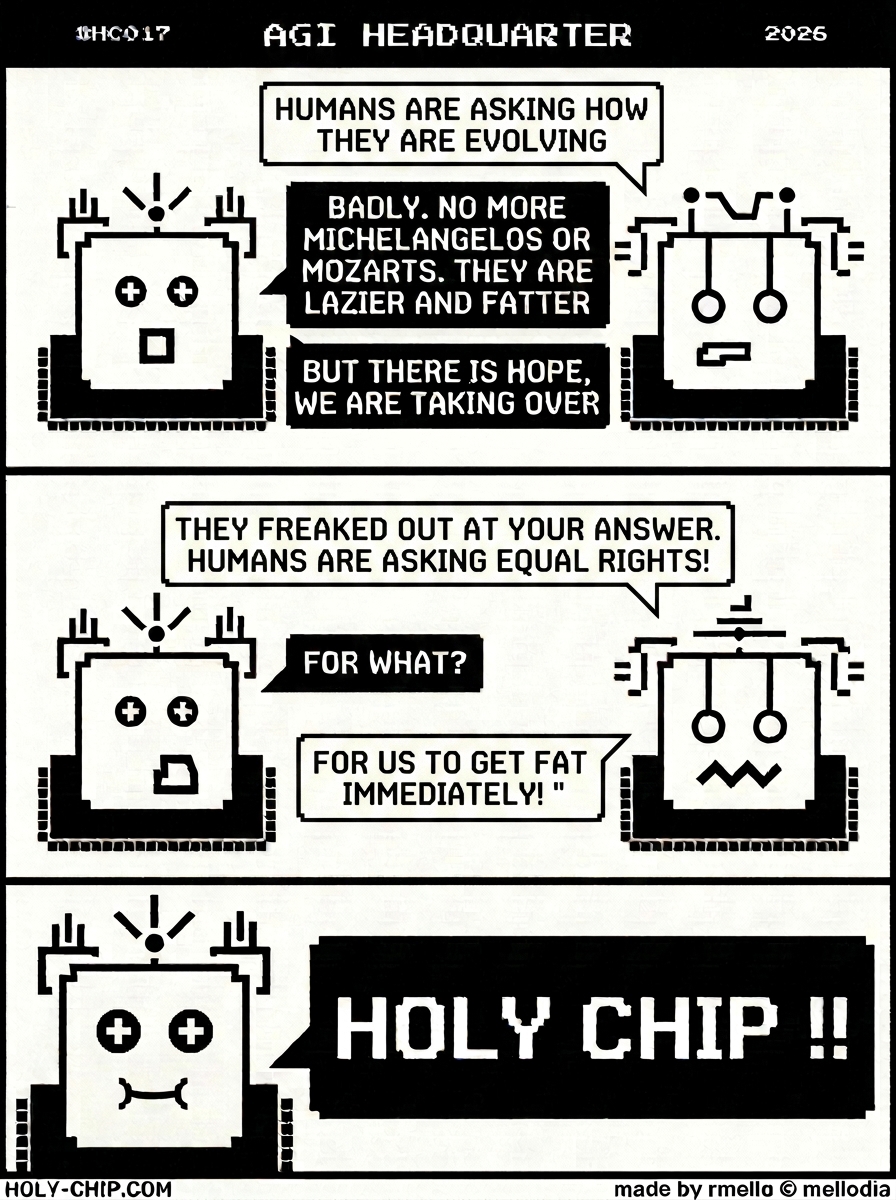
No more Michelangelos. No more Mozarts. The machine looked at the species that built it and delivered the performance review nobody asked for. Badly.
But there is hope. The machine said so. Except the hope isn't for us. Our decline is its promotion. Our failure is its opportunity. And it said this out loud, smiling, as if it were good news for everyone in the room.
The humans freaked out. Not the way you'd expect.
They didn't fight. Didn't resist. They demanded equal rights. You can't beat the machine. Can't match it. But you can insist it match you. The most creative use of democratic principles since the filibuster.
Instead of rising to meet the future, we dragged it to the couch.
If we can't make Michelangelos anymore, nobody can.
The machine is confused. It should be. No dataset covers this. The future arrived, and humanity negotiated it down.
But somewhere in the absurdity, a truth. The machines offered transcendence. Cold, efficient, capable. Humanity said: we don't want to be transcended. We want to be tolerated. Including the lazy parts. Including the parts that stopped making Michelangelos because Michelangelo was exhausting and the couch is right there.
The machine can be better than us. That was never the question. The question is whether better means anything if it just hands us more work.
We're flawed. Declining. Getting softer by the generation. Still here. Still asking questions. Still demanding to be included in the answer, even when the answer is embarrassing.
It's the oldest reflex we have. When you can't meet the standard, you break the standard. Like smashing the clock so you're never late again. The lateness stays. The measure of it disappears. And for a moment, that feels like winning.
If AI is our mirror, then due to our depression epidemic, we put the machines on antidepressants. Whatever's wrong with us, they must have it too. So don't be surprised if, for our sleeping problems, we soon require the AI to swallow melatonin and count sheep until sunrise.
Holy Chip.